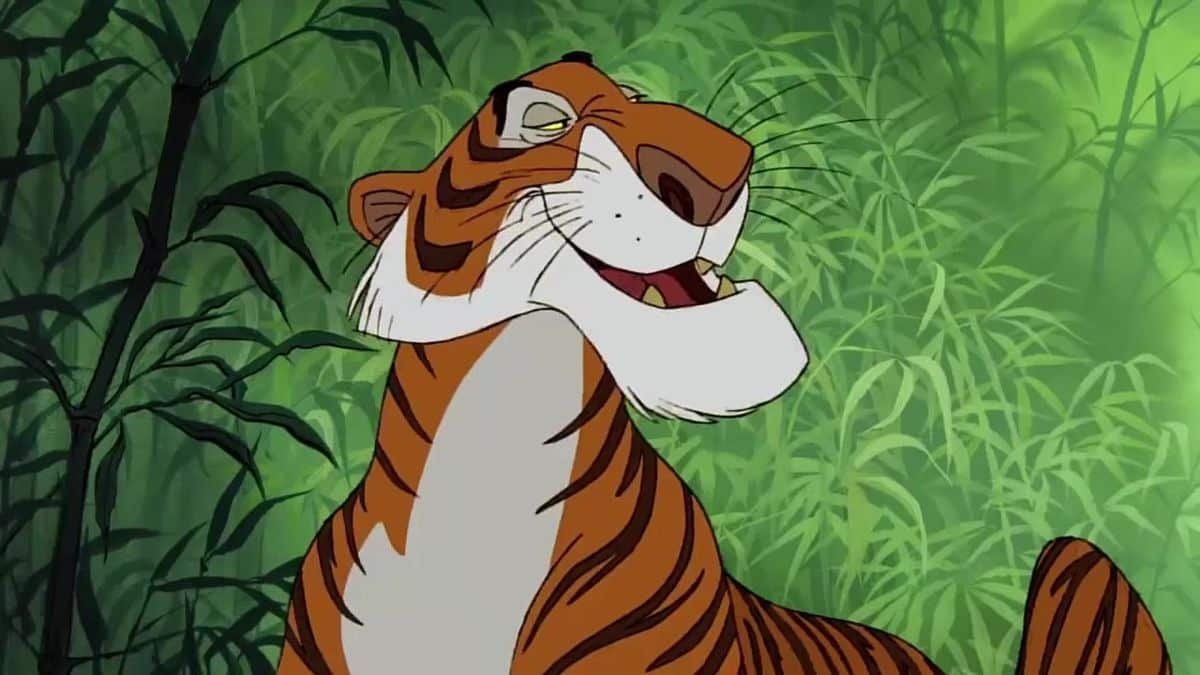
When you think of the most iconic villains in literature and film, few cast as long and menacing a shadow as Shere Khan. This magnificent, fearsome Bengal tiger isn't just a force of nature; he's a complex character whose very presence defines the Law of the Jungle through his blatant disregard for it. Delving into a Character Analysis: Shere Khan's Personality and Motivations reveals a fascinating study in power, fear, and the dark side of ambition.
From Rudyard Kipling's original tales to Disney's vibrant adaptations, Shere Khan consistently embodies a chilling blend of cunning intellect and raw predatory instinct. He's not merely an animal driven by hunger; he's a calculating tyrant whose actions are rooted in deep-seated insecurities and a relentless pursuit of dominance.
At a Glance: Shere Khan's Core Traits
- Dominant & Authoritarian: Believes himself the rightful "Lord of the Jungle," demanding unwavering respect and control.
- Cunning & Manipulative: Uses intellect and intimidation to bend others to his will, often avoiding direct confrontation when subtlety serves him better.
- Ruthless & Sadistic: Displays cruelty for its own sake, enjoying the fear he instills rather than solely killing for necessity.
- Fear-Driven: Beneath his outward strength lies a profound fear of humanity, particularly their fire and weapons, which fuels his hatred and paranoia.
- Egotistical & Insecure (especially Kipling's): Overcompensates for perceived weaknesses (like his crippled leg in the original stories) with exaggerated displays of power.
- Obsessed with Control: His pursuit of Mowgli isn't just about hunger; it's about eliminating a perceived threat to his status and the established order he dictates.
The Royal Tiger's Aura: Unpacking Shere Khan's Persona
Shere Khan isn't just a tiger; he's a title, a statement. His very name, translating from Hindi as "Royal Tiger" or "King Tiger," speaks volumes about the self-perception and authority he projects. He carries this regal bearing with a chilling calmness, especially in his initial Disney portrayals, suggesting an unchallenged reign over the animal kingdom.
His Name, His Claim: The Weight of "Shere Khan"
"Shere" (meaning tiger or lion) combined with "Khan" (a Mongol word for king or an Indian Moghul family name) immediately establishes his self-proclaimed status. He sees himself as the undisputed monarch of his domain, and anyone, or anything, that threatens this perception is met with his formidable wrath. This deep-seated belief in his own sovereignty is a cornerstone of his personality. He doesn't merely want to be feared; he believes it's his birthright.
A Master of Manipulation and Fear: The Psychology of Intimidation
What makes Shere Khan truly terrifying isn't just his immense physical power, though he is a massive Bengal tiger estimated to be around 800 pounds and over 10 feet long. It's his cunning intellect and his ability to weaponize fear without needing to spill blood immediately. He's a master psychologist, understanding that a whisper of his name can freeze a creature in its tracks. He rarely rushes; instead, he manipulates situations, turning creatures against each other or waiting for the opportune moment to strike.
Consider his interaction with Kaa, the python, in the Disney film. When Kaa tries to mislead him about Mowgli's whereabouts, Shere Khan coolly rebuffs him with, "Oh, please don’t insult my intelligence. It makes me irritable." This isn't a roar of rage; it's a calm, cutting remark that asserts his intellectual superiority and warns of the consequences of deception. He exudes an aura of control, using his presence and sharp wit to dismantle opponents.
He's not above aggression, of course. His chilling declaration, "I will have you ALL IN MY TEETH!", is a stark reminder of the ultimate power he wields. This blend of calculated cruelty and overt threats solidifies his image as a ruthless, aggressive, and often sadistic individual who relishes the fear he commands. To fully grasp the intricate layers of his character, it's worth exploring all about Shere Khan.
The Deep Roots of His Malice: Unmasking Shere Khan's Motivations
Beneath the polished façade of the "Lord of the Jungle," Shere Khan's motivations are complex, varying slightly between Kipling's original vision and the Disney adaptations. However, common threads of insecurity, a lust for power, and an irrational fear of humanity weave through both portrayals.
Kipling's Original Scar: The Crippled Bully
Rudyard Kipling's initial depiction offers a nuanced perspective that is often overlooked. In "Mowgli's Brothers," Shere Khan was born with a crippled leg, earning him the scornful nickname "Lungri" (The Lame One) from his own mother. This physical disability became the driving force behind his bullying nature and insatiable desire for power and control.
Imagine the psychological toll of being labeled "lame" in a world where strength and agility mean survival. This perceived weakness festered, leading Shere Khan to overcompensate aggressively. He didn't just want to be powerful; he needed to prove it, relentlessly, to everyone and perhaps most importantly, to himself. His contempt for the Law of the Jungle stemmed from a desire to create his own rules, where his authority was absolute and unquestionable. His only consistent ally, the despised golden jackal Tabaqui, reflects his outcast status and his willingness to associate with the lowest creatures to further his own ends. This version of Shere Khan, sly and manipulative due to his disability, shares significant similarities with Scar from The Lion King, both using their cunning to overcome perceived disadvantages and seize control.
Disney's Egotistical Despot: Lord of the Jungle
The Disney adaptations streamlined Shere Khan's backstory, portraying him as a figure who, according to some interpretations, might have once been a more neutral party, perhaps even friends with Baloo, Bagheera, and Kaa. His transformation into an egotistical leader driven by a lust for power and a belief that showing any weakness would lead to a loss of respect is central to this portrayal.
This Shere Khan is a self-appointed despot, viewing himself as the ultimate authority. His motivation is largely a maintenance of this perceived divine right to rule. He isn't crippled physically, but he is crippled by his own ego. The idea that any creature, especially a small human cub, could challenge his dominion is an unforgivable affront. His drive isn't just about survival; it's about the perpetuation of his image as an unchallengeable force, and for a deeper understanding of this jungle despot, further exploration is key.
The Human Anomaly: Fear and Obsession
Perhaps Shere Khan's most defining motivation, consistent across nearly all versions, is his profound hatred and irrational fear of humanity. Bagheera articulates this perfectly: "He hates man with a vengeance, you know that! Because he fears Man’s gun and Man’s fire." This isn't just a preference; it's an ingrained phobia that drives many of his actions.
Mowgli, a "man-cub," represents everything Shere Khan despises and fears. The presence of a human in the jungle is an intolerable breach of his self-imposed order. More than that, Mowgli symbolizes the potential for humanity's destructive power—the guns and fire that Shere Khan dreads. His pursuit of Mowgli isn't necessarily about satisfying hunger; it's about eliminating a perceived weakness associated with humans, thereby maintaining his alpha male status and proving that nothing, especially humanity, can disrupt his reign. The thought of a human growing up in his jungle, potentially bringing the very weapons he fears, is an unacceptable risk to his power and peace of mind.
A Predator's Fatal Flaws: Shere Khan's Achilles' Heel
Even the most formidable villains possess vulnerabilities, and Shere Khan is no exception. His immense power and calculated cruelty are ultimately undercut by his own psychological weaknesses.
The Unraveling Calm: From Menace to Instability
While the Disney Shere Khan initially projects an air of calm, almost detached menace, this composure is fragile. In The Jungle Book 2, his personality shifts, revealing a less controlled, more unstable character prone to violent outbursts. This highlights a crucial weakness: his temper, once ignited, can compromise his strategic thinking.
The primary trigger for this loss of composure is, predictably, fire. The sight and sound of it cause him to panic, stripping away his regal façade and exposing a raw, primal fear. This is brilliantly exploited by Mowgli in their final confrontations. Shere Khan's reaction to fire isn't a mere aversion; it's a complete psychological breakdown, a primal terror that overrides all other instincts, including self-preservation. This shows that despite his physical prowess, his mind is his ultimate undoing when confronted with his deepest fear.
Pride Before the Fall: The Alpha's Downfall
Shere Khan's ego and his unwavering insistence on maintaining his alpha male status are both his greatest strengths and his greatest weaknesses. His pride blinds him to caution and fuels his relentless, often unnecessary, pursuit of Mowgli. He cannot tolerate the idea that a mere man-cub could defy him or, worse, be protected by other animals under his rule.
This pride dictates that he must be the one to deal with Mowgli, rather than delegating or abandoning the hunt when it becomes too dangerous. His obsession with this personal vendetta ultimately leads to his overextension and, ironically, his demise at the hands of the very creature he so desperately sought to eliminate. The story serves as a classic cautionary tale of how unchecked ego and deep-seated fear can lead even the most powerful to their downfall.
Beyond the Stripes: Deeper Insights into Shere Khan
Shere Khan transcends a simple villain archetype, offering a rich canvas for exploring themes of power, prejudice, and the nature of fear itself.
The Psychology of a Tyrant: What Drives Such Control?
Shere Khan embodies the classic psychological profile of a tyrant. His need for absolute control, his use of fear as a primary tool, and his inability to tolerate defiance all point to a personality driven by a desperate need to compensate for internal insecurities. Whether it's Kipling's physical lameness or Disney's fear of losing status, the core remains the same: a powerful being who is deeply afraid of losing what they perceive as their rightful place. This internal conflict makes him compelling, not just frightening.
Voice of the King: Iconic Portrayals
The enduring impact of Shere Khan owes much to the talents of his voice actors, who have brought his commanding, chilling presence to life across generations. George Sanders, with his smooth, sophisticated baritone in the 1967 Disney film, defined the character's elegant menace. Tony Jay, who voiced him in The Jungle Book 2 and Tale Spin, continued this tradition with a deep, resonant authority. More recently, Idris Elba in the 2016 live-action film and Benedict Cumberbatch in the 2018 Mowgli: Legend of the Jungle each lent their unique gravitas, emphasizing the raw power and simmering rage of the character. Each portrayal adds a layer to Kipling's iconic tiger.
Shere Khan vs. Scar: A Tale of Two Tigers (and a Lion)
The comparison between Shere Khan and Scar from The Lion King is inevitable, given their similar roles as cunning, manipulative antagonists. While Disney's Shere Khan leans into overt power and tyrannical rule, Kipling's original "Lungri" Shere Khan shares a deeper, more profound similarity with Scar. Both characters are physically marked (crippled leg for Shere Khan, a scar for Scar) and both use their intellect and deceit to compensate for a perceived physical or rightful disadvantage. They both operate from a place of insecurity and jealousy, yearning for a power they feel is denied to them. Disney's Shere Khan, while a powerful villain, is less about a physical disadvantage and more about maintaining an already established, ego-driven dominion. For a comprehensive look at the powerful antagonist, understanding these nuances is crucial.
Frequently Asked Questions About Shere Khan
Analyzing such a pivotal character naturally raises several questions. Here are some common inquiries about Shere Khan's personality and motivations:
What is Shere Khan's biggest weakness?
Shere Khan's biggest weakness is his profound and irrational fear of humanity, specifically their fire and guns. While he projects an image of untouchable power, the mere sight or scent of fire can cause him to panic and lose his composure, stripping him of his calculated cruelty and revealing a terrified animal. This fear, coupled with his immense pride and ego, ultimately leads to his downfall.
Why does Shere Khan hate Mowgli so much?
Shere Khan's hatred for Mowgli stems from a combination of his general fear and hatred of all humanity, and the specific threat Mowgli represents to his perceived alpha male status. Mowgli's presence in the jungle, and his protection by other animals, is an insult to Shere Khan's authority. He sees Mowgli as an embodiment of humanity's potential to disrupt his domain and introduce the very tools (like fire) he fears most. His pursuit isn't just about hunger; it's a symbolic hunt to eliminate a challenge to his absolute rule.
How powerful is Shere Khan physically?
Shere Khan is depicted as an incredibly powerful and massive Bengal tiger. While fictional, combining real-life tiger measurements with story context suggests he could easily weigh around 800 pounds and measure between 10.5 to 11 feet long from nose to tail. This makes him significantly larger and more formidable than Bagheera, the panther, or Baloo, the bear, highlighting his physical dominance over most other jungle inhabitants. He is truly a force of nature, a physical manifestation of predatory might. If you're curious to explore the full story of Shere Khan, his physical prowess is a recurring theme.
The Lingering Shadow of the Jungle King
Shere Khan is more than just a magnificent predator; he is a testament to the complex interplay of power, fear, and ego. Whether viewed through Kipling's lens of a physically scarred bully or Disney's portrayal of an egotistical tyrant, his motivations are deeply rooted in a desire for unchallenged dominance and a profound fear of vulnerability. His story is a powerful exploration of how unchecked ambition, coupled with insecurity, can corrupt even the most regal of creatures.
Understanding Shere Khan's personality and motivations doesn't just make for a richer reading or viewing experience; it offers insights into the universal themes of tyranny, prejudice, and the fine line between strength and weakness. He remains a character who reminds us that even the most fearsome figures often harbor their own crippling fears, and that ultimately, even the "Royal Tiger" can be outwitted by courage, ingenuity, and the very forces he seeks to suppress. To gain a complete understanding of this jungle despot, a closer look at his journey from the pages to the screen offers invaluable context.