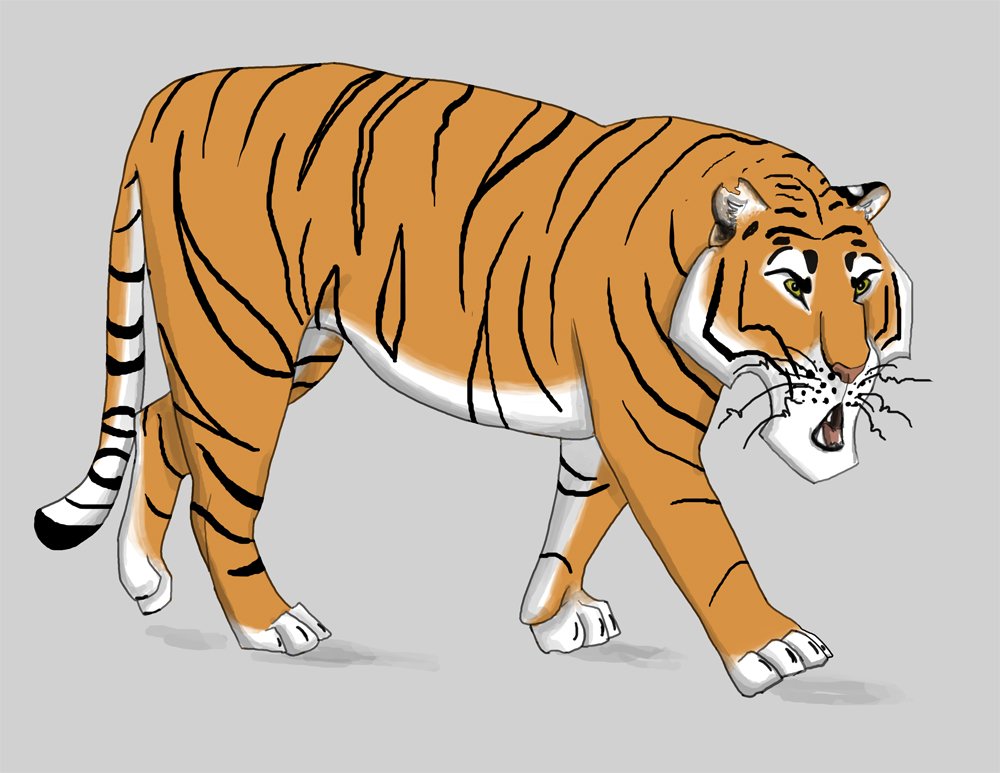
Mention "The Jungle Book," and a specific character often leaps to mind, casting a long, menacing shadow over the verdant landscape: Shere Khan. This magnificent, yet undeniably evil, tiger is an antagonist etched deeply into our cultural consciousness. But what exactly is Shere Khan's origin and literary history? How did Rudyard Kipling envision him, and how has his portrayal evolved from a limping, boastful bully to the suave, terrifying force we often see on screen today? Let's peel back the layers of myth and adaptation to truly understand this iconic predator.
At a Glance: The Enduring Legacy of Shere Khan
- Original Creator: Rudyard Kipling in "The Jungle Book" (1894).
- Kipling's Portrayal: A physically flawed (lame), arrogant, and cowardly tiger who despises humans and disregards the Jungle Law.
- Core Motivation: To hunt Mowgli and challenge the established order of the jungle.
- Symbolism: Represents chaos, lawlessness, the destructive side of nature, and unchecked arrogance.
- Adaptations' Evolution: Often reimagined as a more powerful, intelligent, and sophisticated villain (e.g., Disney's 1967 version).
- Lasting Impact: A quintessential antagonist whose complexity and threat remain compelling across generations and media.
The Jungle's Shadow: Who is Shere Khan?
From the moment he is introduced, Shere Khan is presented as a disruptive force, a dissonant roar in the otherwise ordered symphony of the jungle. He is the relentless hunter who breaks the cardinal rule by hunting man, the predator who refuses to play by the established "Jungle Law." For Mowgli, the man-cub, Shere Khan is more than just a foe; he is the embodiment of a primal threat, a constant shadow that dictates much of the young boy's journey through the wilderness. Understanding Shere Khan isn't just about knowing a villain; it's about understanding the moral compass and inherent challenges within Kipling's celebrated tales.
Birth of a Predator: Shere Khan's Kiplingesque Origins
Rudyard Kipling first introduced the world to Shere Khan in his seminal work, "The Jungle Book," published in 1894. Set in the Seoni region of Madhya Pradesh, India, Kipling drew heavily on his experiences growing up in India, imbuing his animal characters with human-like qualities and a complex social structure governed by the strict "Law of the Jungle."
In Kipling's original stories, Shere Khan is not merely a powerful beast but a tiger burdened by a physical defect. He is described as "Shere Khan the Big One," but also "the Lame One" due to an injury to his foot. This lameness, far from making him sympathetic, is portrayed as a source of his malicious nature and a reason for his deep-seated resentment and vanity. Unable to hunt natural prey as effectively as other tigers, he often resorts to preying on villagers' cattle and, notoriously, humans—a practice largely forbidden by the Jungle Law.
His motivation for seeking out Mowgli, the abandoned "man-cub," is less about raw hunger and more about perverse sport and a twisted sense of entitlement. Kipling makes it clear that Shere Khan is an outcast, scorned by his fellow jungle dwellers, including the wolves, Bagheera the panther, and Baloo the bear, for his law-breaking ways and his inherent cowardice. He's often accompanied by Tabaqui, the despicable jackal, who serves as his fawning, gossiping sycophant, further highlighting Shere Khan's status as a morally corrupt figure. This early portrayal of Shere Khan from The Jungle Book established him as a villain rooted in both physical imperfection and moral depravity.
A Hunter's Flaws: Diving Deeper into Kipling's Shere Khan
Kipling carefully crafted Shere Khan to be more than just a stock antagonist. He is a study in contrasts, a creature of immense physical power marred by debilitating moral weaknesses. His lameness is not just a physical attribute; it's a metaphor for his brokenness, his inability to adhere to the natural order. Unlike the noble Akela, the wise Baloo, or the cunning Bagheera, Shere Khan operates outside the respected social codes of the jungle. He represents the anarchy that threatens to unravel the delicate balance of the wild.
His disdain for the Law of the Jungle is what truly sets him apart. This isn't just about breaking rules; it's about a fundamental rejection of community and mutual respect. He views the other animals' adherence to the law as weakness, preferring to indulge his own desires without consequence. This makes him particularly dangerous because he isn't just a force of nature; he's a force of deliberate malice.
Moreover, Kipling weaves a prophecy into Shere Khan's narrative: that he will ultimately be killed by a man. This foretelling adds a layer of fatalism to his character, making his relentless pursuit of Mowgli not just a personal vendetta but a tragic march toward his own predetermined downfall. His eventual demise at Mowgli's hands, specifically through the use of fire and stampeding buffalo, is a profound moment, symbolizing humanity's growing power over raw, untamed nature, and the triumph of order over chaos.
From Page to Screen: Shere Khan's Evolving Portrayal
The leap from the printed page to the flickering screen has transformed Shere Khan perhaps more dramatically than any other character from "The Jungle Book." Each adaptation has reinterpreted his essence, shifting his threat level and personality to suit new audiences and storytelling styles.
The Suave Menace: Disney's 1967 Animated Classic
Perhaps the most influential reinterpretation came with Walt Disney's animated musical "The Jungle Book" (1967). Here, Shere Khan underwent a significant makeover. Gone was the lame, cowardly bully of Kipling's tales. In his place emerged a figure of elegant menace, voiced with sophisticated disdain by George Sanders. This Shere Khan was physically perfect, impeccably groomed, and possessed a silky smooth voice that masked a chilling, calculating cruelty.
Disney's Shere Khan maintained his hatred for humans, particularly Mowgli, but his motivations seemed to elevate from mere sport to a more existential threat. He feared humanity's power, specifically fire, and saw Mowgli as an undeniable harbinger of future destruction for the jungle. This version made him a more classic, aristocratic villain—a powerful, intelligent adversary who commanded respect even as he inspired fear. His intelligence and strategic thinking made him a more formidable and less pitiable antagonist.
Live-Action Reimagining: Modern Grit and Primal Fear
Later live-action adaptations further refined Shere Khan's image, often leaning into a more primal, terrifying realism:
- Jon Favreau's "The Jungle Book" (2016): Voiced by Idris Elba, this Shere Khan presented a formidable, scarred, and genuinely terrifying presence. Favreau's version returned to the idea of Shere Khan as a scarred animal, but instead of lameness, he bore the marks of past battles, giving him an aura of brutal experience. He was less suave than Disney's animated version and more a force of nature—a truly wild, dominant predator whose hatred for humans was palpable and deeply ingrained, fueled by past trauma from mankind. This adaptation depicted him as a ruthless enforcer of his own twisted version of jungle law, demanding submission and sowing fear. The digital animation allowed for an incredibly realistic and intimidating portrayal.
- Andy Serkis's "Mowgli: Legend of the Jungle" (2018): Benedict Cumberbatch lent his voice to Shere Khan in Serkis's darker, more grounded take. This film leaned heavily into the psychological aspects of Shere Khan's villainy. He was depicted as cunning, vengeful, and exceptionally brutal. His motivations were deeply personal, driven by a desire for power and a deep-seated grievance. Serkis's use of motion capture brought a raw, almost human-like cunning to the tiger's expressions, making him intensely unsettling.
These modern adaptations have consistently amplified Shere Khan's physical prowess and strategic intellect, moving away from Kipling's portrayal of a physically flawed and somewhat pathetic figure. They emphasize his capacity for cruelty and his role as a dominant, fearful presence in the jungle, reflecting contemporary tastes for more complex and menacing antagonists.
The Shere Khan Spectrum: Comparing Interpretations
The journey of Shere Khan from Kipling's pages to various screens offers a fascinating case study in character evolution. We've seen a shift from a character who is intrinsically flawed in Kipling's hands—lame, boastful, cowardly—to one who is inherently powerful and cunning in many adaptations.
Kipling's Shere Khan:
- Key Traits: Lame, vain, cowardly, rule-breaker, disliked by other animals.
- Motivation: Spite, hunger, a desire to assert dominance over perceived weaker beings.
- Threat Level: Dangerous due to his malice and disregard for law, but also somewhat pathetic due to his physical limitations and social ostracization.
- Symbolism: Represents corruption, lawlessness, the dark side of ambition, and the consequences of moral failings.
Disney's 1967 Shere Khan: - Key Traits: Elegant, suave, intelligent, sophisticated, physically perfect.
- Motivation: Fear of humanity, desire to eliminate Mowgli as a threat to his jungle domain.
- Threat Level: High, due to his intelligence, strategic thinking, and underlying ruthlessness.
- Symbolism: Represents aristocratic evil, calculated menace, the fear of the unknown.
Modern Live-Action Shere Khan (e.g., 2016 Favreau): - Key Traits: Brutal, scarred, primal, powerful, deeply vengeful.
- Motivation: Trauma from past human encounters, territorial dominance, a relentless hatred for humanity.
- Threat Level: Extremely high, a truly terrifying force of nature coupled with intense malice.
- Symbolism: Represents raw, untamed nature, the consequences of human encroachment, primal fear, and deeply rooted vendettas.
The change isn't just cosmetic; it reflects different storytelling needs. Kipling's era favored moral allegories and characters with discernible flaws that led to their downfall. Modern audiences often prefer villains who are powerful and intelligent, offering a more challenging foil for the hero. While Kipling's Shere Khan's downfall felt like a just consequence for his character, Disney's Shere Khan's defeat felt like the triumph of good over a truly formidable evil. The modern versions often blend these, giving us a powerful villain whose deep-seated hatred also leads to his ultimate destruction.
More Than Just a Tiger: Shere Khan's Enduring Symbolism
Regardless of his specific portrayal, Shere Khan's symbolic weight remains remarkably consistent. He is the ultimate antithesis to the Law of the Jungle, embodying chaos where the Law provides order, self-interest where the Law preaches community, and destructive power where the Law dictates balance.
He represents the primal fear of the wild, the untamed, and the unpredictable. For Mowgli, Shere Khan is the constant reminder of his precarious position as a human in an animal world, and the ultimate test of his ability to survive and thrive. Shere Khan's malevolence also serves as a critical catalyst for Mowgli's growth, forcing the man-cub to confront his fears and embrace his unique human intelligence and capabilities.
Beyond the literal narrative, Shere Khan can be seen as a reflection of human flaws: unchecked arrogance, petty vengeance, and the desire for power without responsibility. His disdain for the rules parallels real-world disregard for societal norms or environmental balance. Even in his most suave forms, he ultimately embodies a destructive force that must be overcome for harmony to prevail.
Common Misconceptions and Clarifications
Given the character's long history and numerous adaptations, a few misconceptions often arise about Shere Khan:
- Misconception 1: Shere Khan is universally respected or the "King of the Jungle."
- Clarification: In Kipling's original stories, Shere Khan is actively scorned and disliked by most of the jungle animals. His lameness and law-breaking ways make him an outcast. The "King of the Jungle" title is more commonly associated with lions (like in The Lion King) and doesn't fit Shere Khan's role in Kipling's universe. While later adaptations give him more power, he rules through fear, not respect.
- Misconception 2: He hates humans for no clear reason, just pure evil.
- Clarification: While he is certainly evil, Kipling hints at his deeper motivations. His lameness forces him to hunt easier prey, including humans, which is against the Jungle Law. This defiance becomes a core part of his identity. In modern adaptations, this hatred is often given more direct backstory, such as being scarred by humans, providing a clearer, albeit twisted, rationale for his animosity.
- Misconception 3: He's the most powerful animal in the jungle.
- Clarification: Shere Khan is undeniably powerful, but his power is often contrasted with the collective strength of the Seeonee Wolf Pack, the wisdom of Baloo, and the cunning of Bagheera. His defeat by Mowgli, a mere human, emphasizes that raw strength isn't always paramount. The Law of the Jungle, upheld by the community, often proves more powerful than any individual predator.
The Roar That Echoes: Shere Khan's Lasting Legacy
Shere Khan’s enduring appeal lies in his ability to embody a potent, primal threat. He is the perfect antagonist: powerful, menacing, and deeply motivated, providing the essential conflict that drives Mowgli's heroic journey. His literary history showcases the fluidity of character, demonstrating how foundational elements can be reinterpreted to resonate with different cultural moments and artistic visions.
From a limping, contemptible bully to a sophisticated, terrifying mastermind, Shere Khan has consistently challenged Mowgli and, by extension, the reader, to confront the darker aspects of nature and ambition. He reminds us that even within the most established order, there exists a force of chaos waiting to assert its will. His shadow continues to loom large over the jungle, a testament to Kipling's masterful creation and the timeless appeal of a truly great villain.
Beyond the Hunt: What Shere Khan Teaches Us
The long and varied literary history of Shere Khan offers more than just entertainment; it provides valuable insights. It teaches us about the power of original source material, demonstrating how deeply a character can be transformed by subsequent interpretations. It encourages us to look beyond the surface, recognizing that even the most straightforward villain might carry complex symbolic weight or a hidden backstory.
Ultimately, Shere Khan, in all his forms, underscores the ongoing battle between order and chaos, law and lawlessness. He compels us to consider the consequences of unchecked arrogance and the importance of community and ethical boundaries. So, the next time you encounter the mighty tiger, take a moment to appreciate the depth of his origins and the rich tapestry of his literary journey—a journey that continues to fascinate and even, subtly, instruct us.