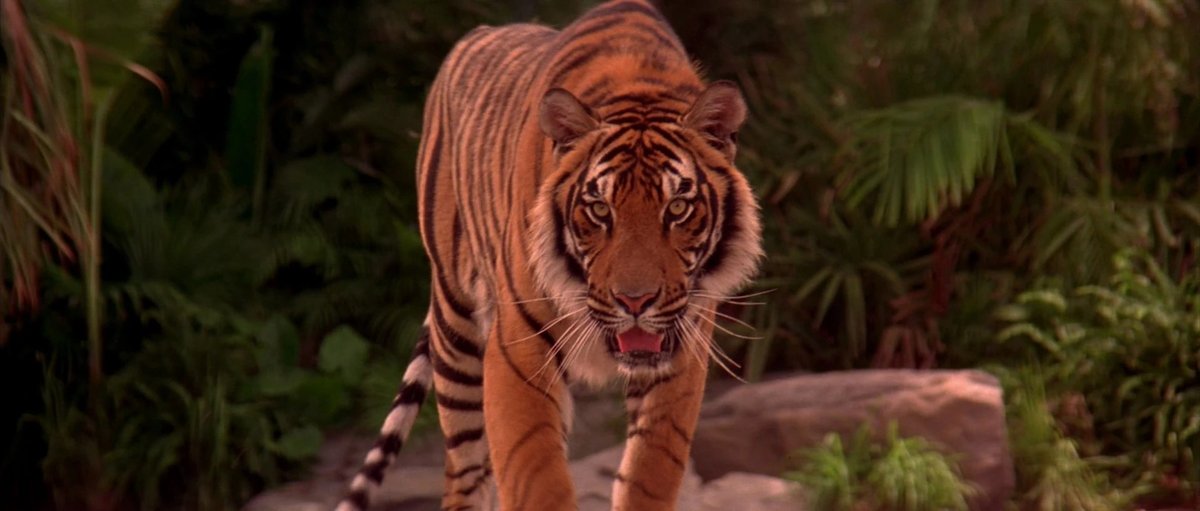
When we talk about classic villains, few loom as large or cast as long a shadow as Shere Khan. This isn't just a tiger; he's the very embodiment of menace in Rudyard Kipling's The Jungle Book, and specifically in Disney's iconic adaptations. Understanding Shere Khan's role as an antagonist and his key conflicts is crucial to grasping the heart of Mowgli's journey and the complex ecosystem of the jungle. He's not merely an obstacle; he’s a force of nature, driven by primal instincts, deep-seated prejudice, and an unsettling intelligence that makes him truly terrifying.
His presence isn't just about chasing Mowgli; it's about challenging the established order, preying on fear, and forcing every other character to confront their own courage and loyalties. He represents the wild's untamed danger, a cunning predator whose disdain for humanity, particularly the "man-cub," ignites the central drama.
At a Glance: Decoding Shere Khan's Antagonism
- Primal Threat: Shere Khan symbolizes the inherent dangers and untamed ferocity of the wild, acting as a constant, inescapable threat.
- Motivated by Prejudice & Fear: His primary drive is his deep-seated hatred and fear of man, specifically Mowgli, which he justifies as upholding the jungle's "law."
- Master of Intimidation: He uses his formidable presence, cunning, and reputation to instill fear and manipulate others.
- Catalyst for Conflict: He's the central antagonist, directly sparking Mowgli's flight from the pack and indirectly shaping the choices and alliances of nearly every character.
- Embodiment of Cruelty: His actions are often driven by malice and a desire for control, highlighting the darker aspects of the jungle.
- Thematic Weight: Shere Khan represents themes of prejudice, the disruption of natural order, and the confrontation between civilization (Mowgli's potential) and the wild.
The Tiger's Roar: Who is Shere Khan, Really?
Before we dissect his conflicts, let’s get a clear picture of Shere Khan himself. He's not just a tiger; he's the tiger – the undisputed lord of the jungle, or at least he sees himself that way. His very name, Shere Khan, translates roughly to "Tiger King," a title he lives up to through sheer force of will, terrifying reputation, and unparalleled predatory prowess. He's sleek, powerful, and possesses a chilling elegance that makes his malevolence all the more impactful.
In the world of The Jungle Book, Shere Khan operates outside the traditional jungle law that others, like the wolf pack or Baloo, adhere to. He considers himself above it, choosing to follow only his own desires, which primarily revolve around hunting whatever he pleases and eliminating any perceived threats. This self-serving philosophy sets him on a collision course with anyone who believes in a more balanced, communal way of life.
Beyond the Stripes: Shere Khan's Core Antagonistic Role
Shere Khan’s role isn't just about being "the bad guy." He functions as a multi-layered antagonist, embodying several key dimensions of conflict that drive the entire narrative.
The Embodiment of Primal Fear
At his core, Shere Khan represents primal, untamed danger. He’s the shadow lurking in the periphery, the sudden roar that silences the jungle. For the animals, he’s a constant reminder that even in their domain, life is fragile and powerful predators rule. This fear isn't just physical; it’s psychological, creating an atmosphere of tension and dread that permeates the story, compelling many of the jungle inhabitants to avoid his wrath at all costs. His presence alone is enough to send shivers down the spine of even the bravest animals.
The Catalyst for Change and Flight
Shere Khan doesn't just appear; he triggers the entire plot. His initial threat to Mowgli is what forces the wolf pack to make a difficult decision, leading to Mowgli's eventual departure from their protective care. Without Shere Khan's relentless pursuit and his explicit threat to kill Mowgli, there would be no reason for the man-cub to leave the familiar comfort of his wolf family, and thus, no adventure. He is the prime mover, the agent provocateur who sets the whole story in motion.
The Archetype of Unchecked Power and Prejudice
What truly defines Shere Khan's villainy is his prejudice against humans. He sees Mowgli not as an individual, but as "man" – a creature whose very existence is a threat to the jungle. This isn’t a rational fear; it’s a deep-seated, almost ancestral hatred, amplified by an encounter where a man wounded him with fire. This personal grudge blossoms into a broader prejudice, fueling his conviction that humans have no place in the jungle and must be exterminated. He believes his power gives him the right to enforce this twisted worldview, regardless of the consequences for others.
Mowgli: The Heart of the Tiger's Obsession
The central conflict, the beating drum of Shere Khan’s antagonism, is his unwavering obsession with Mowgli. This isn't just about a tiger hunting prey; it's deeply personal and thematic.
The "Man-Cub" Threat: A Clash of Worlds
Shere Khan's vendetta against Mowgli stems from his inherent loathing for mankind. He views humans as destructive, unnatural intruders who bring "the red flower" (fire) and guns, disrupting the balance of the jungle. Mowgli, despite being raised by wolves and having no memory of human civilization, is a living symbol of this perceived threat. For Shere Khan, Mowgli isn't just a tasty meal; he’s an anomaly, an abomination that must be removed to preserve the jungle as Shere Khan believes it should be. This fixation transforms Mowgli from an innocent child into a symbol of everything Shere Khan despises.
The Relentless Pursuit: A Test of Resolve
Shere Khan's pursuit of Mowgli is relentless, embodying a predator’s unwavering focus. From the moment he declares his intent, he becomes an omnipresent danger, a constant shadow in Mowgli's journey. This forces Mowgli, and his guardians Baloo and Bagheera, to constantly be on guard, to learn, to adapt, and to make difficult choices. The chase isn't just physical; it's a psychological battle, wearing down Mowgli's youthful exuberance and forcing him to confront mortality and the harsh realities of the wild. This pursuit also serves as a bonding experience for Mowgli with his protectors, solidifying their commitment to him.
If you're eager to dive deeper into the nuances of this iconic character, you'll find an expansive collection of insights at our Jungle Book Shere Khan hub.
Key Conflicts Beyond Mowgli: Shere Khan's Wider Reach
While Mowgli is his primary target, Shere Khan’s influence and antagonisms extend to nearly every major character in the story, showcasing his role as a universal disruptive force.
Baloo and Bagheera: Protectors vs. Predator
The conflict between Shere Khan and Mowgli is amplified by the unwavering loyalty of Baloo and Bagheera. These two characters, though vastly different in their approaches (Baloo's easygoing nature, Bagheera's stern wisdom), are united by their love for Mowgli and their commitment to protecting him. Shere Khan sees them as mere impediments, foolishly trying to defy the natural order he believes in. Their clashes are not just about brute strength, but about contrasting philosophies: Shere Khan's destructive individualism against their protective, communal spirit. They represent the forces of good in the jungle, directly opposing Shere Khan’s malevolence.
Akela and the Wolf Pack: Challenging Authority
Even before Mowgli leaves, Shere Khan directly challenges Akela and the wolf pack. The jungle law dictates that a man-cub cannot be part of the pack unless vouched for by two members and approved by the council. Shere Khan bypasses this, demanding Mowgli, knowing full well that defying him would be a severe risk. His audacious challenge to Akela's leadership and the very laws of the jungle underscores his contempt for established authority and his belief that his will should supersede all else. This conflict highlights the power of intimidation and how Shere Khan exploits the fear he instills to get his way.
Kaa: A Dance with Danger (and Manipulation)
The dynamic between Shere Khan and Kaa, the python, is particularly intriguing. While Kaa is primarily a threat to Mowgli himself, Shere Khan sometimes uses Kaa's knowledge (or attempts to) to locate Mowgli. However, Kaa is also a predator with his own agenda, and he's not entirely subservient to the tiger. Their interactions highlight Shere Khan's manipulative side, as he tries to leverage other powerful creatures to achieve his goals. It also reveals that even Shere Khan must navigate the dangerous alliances and rivalries of the jungle, even if he largely does so from a position of dominance. Kaa, with his hypnotic abilities and ancient wisdom, provides a different kind of threat, one that Shere Khan respects, albeit grudgingly.
The Tools of His Trade: How Shere Khan Operates
Shere Khan’s effectiveness as an antagonist isn't just about his physical prowess; it’s about his cunning and his calculated use of fear and psychological tactics.
Psychological Warfare and Reputation
Shere Khan understands the power of a reputation. His infamous name precedes him, and he leverages the fear he inspires to manipulate others. He rarely needs to overtly attack to achieve his aims; merely his presence or a chilling growl is often enough to send animals scattering or to force them into compliance. He uses threats and intimidation as his primary weapons, making others question their resolve and causing them to doubt their ability to protect Mowgli. This psychological pressure is constant, slowly eroding the morale of those who stand against him.
Exploiting Weakness and Opportunity
Shere Khan is a master opportunist. He waits, he watches, and he strikes when vulnerabilities appear. When the wolf pack debates Mowgli's future, he uses the moment of doubt to press his claim. When Mowgli is separated from his guardians, Shere Khan is there, ready to pounce. He targets the young and the vulnerable, demonstrating a cruel efficiency. He's not interested in a fair fight; he's interested in the kill, and he will use any advantage, any moment of distraction, to achieve it.
Thematic Resonance: What Shere Khan Represents
Beyond the literal chase, Shere Khan carries significant thematic weight, enriching the story with deeper meaning.
Primal Fear and the Wild's Inevitable Danger
Shere Khan embodies the sheer, untamed danger of nature itself. He is the force that reminds us that while the jungle can be beautiful and nurturing, it is also brutal, unforgiving, and indifferent to individual lives. His presence grounds the fantastical elements of talking animals in a harsh reality, constantly reminding the audience that Mowgli's journey is truly perilous. He represents the wild that cannot be reasoned with, only navigated or outsmarted.
The Unchecked Power of Prejudice
His unwavering hatred for humans, manifested in his obsession with Mowgli, serves as a powerful allegory for prejudice. Shere Khan doesn't see Mowgli as an innocent child; he sees him as a symbol of a feared group, and his actions are driven by this biased worldview. This allows the story to explore how prejudice can lead to irrational hatred, relentless persecution, and a refusal to acknowledge individual worth beyond group identity. He’s a stark warning about the dangers of allowing hatred to consume judgment.
Disruption of Natural Order
Shere Khan's defiance of the jungle law and his arbitrary application of his own "rules" highlight the fragility of order. The jungle has its own complex system of coexistence and respect (the "law of the jungle," as interpreted by Akela, Baloo, and Bagheera). Shere Khan actively undermines this order, believing himself above it, which creates chaos and instability. His existence forces the other animals to choose between upholding their laws or succumbing to the will of a powerful tyrant.
Shere Khan's Impact and Legacy
The tiger's influence isn't just felt in the direct conflicts; it shapes the entire narrative structure and the development of other characters.
Driving the Plot Forward
As previously mentioned, Shere Khan is the engine of the story. Without his threat, Mowgli's adventure wouldn't happen. His actions dictate Mowgli's path, from the wolf pack to Baloo and Bagheera, to the encounter with King Louie, and ultimately to the man village. Every significant plot point is either a direct consequence of Shere Khan's pursuit or a preparation for an inevitable confrontation with him. He is the antagonist who ensures there is always momentum, always a sense of urgency.
Character Development Through Conflict
Mowgli, Baloo, and Bagheera all grow through their conflicts with Shere Khan. Mowgli learns resilience, cunning, and the importance of relying on his friends. He learns to confront fear and ultimately, to use his "man-wit" to defeat the seemingly invincible tiger. Baloo and Bagheera solidify their bond and their commitment, proving their bravery and loyalty. Even the jungle animals are forced to re-evaluate their positions, often choosing sides or making sacrifices in the face of Shere Khan's tyranny. The tiger's existence forces introspection and growth in all those who cross his path.
Debunking Myths: Common Misconceptions About Shere Khan
Even iconic villains can be misunderstood. Let's clarify a few points about Shere Khan.
- He's Not Just Mean for the Sake of It: While his actions are cruel, they stem from a deeply ingrained fear and prejudice against humanity, not just random malice. There's a twisted logic to his hatred, even if it's based on a flawed premise.
- His Fear of Fire Isn't a Weakness, But a Tactical Blind Spot: While he dreads fire ("the red flower") due to a past injury, it's not a general weakness that makes him cowardly. He's incredibly brave and powerful, but this specific phobia makes him vulnerable to Mowgli’s ingenuity, highlighting the difference between primal strength and intellectual advantage.
- He Doesn't Seek to Rule the Jungle (Unlike Some Villains): Shere Khan isn't explicitly shown desiring to be "king" of the jungle in a political sense, like Scar from The Lion King. His primary goal is control over his territory and the elimination of what he perceives as threats, particularly humans. He wants the jungle to be as he sees fit, free from human influence, and he believes his superior strength entitles him to this vision.
Understanding the Antagonist: What We Learn from Shere Khan
Shere Khan, for all his terrifying grandeur, offers more than just thrills and chills. His character teaches us valuable lessons about the nature of antagonism, fear, and prejudice. He serves as a mirror, reflecting the darker aspects of our own world – the dangers of allowing fear to dictate our actions, the destructive power of unchecked prejudice, and the importance of standing up to tyranny, even when the odds seem insurmountable.
His story is a powerful reminder that sometimes, the greatest threats aren't just physical, but come from deep-seated hatred and the refusal to accept those who are different. Ultimately, Shere Khan's defeat isn't just about Mowgli's survival; it's a victory for compassion, community, and the idea that courage and intelligence can overcome even the most formidable and prejudiced of foes. His reign of terror, however, leaves an indelible mark, reminding us that the jungle, like life itself, contains both beauty and formidable dangers that must be faced head-on.