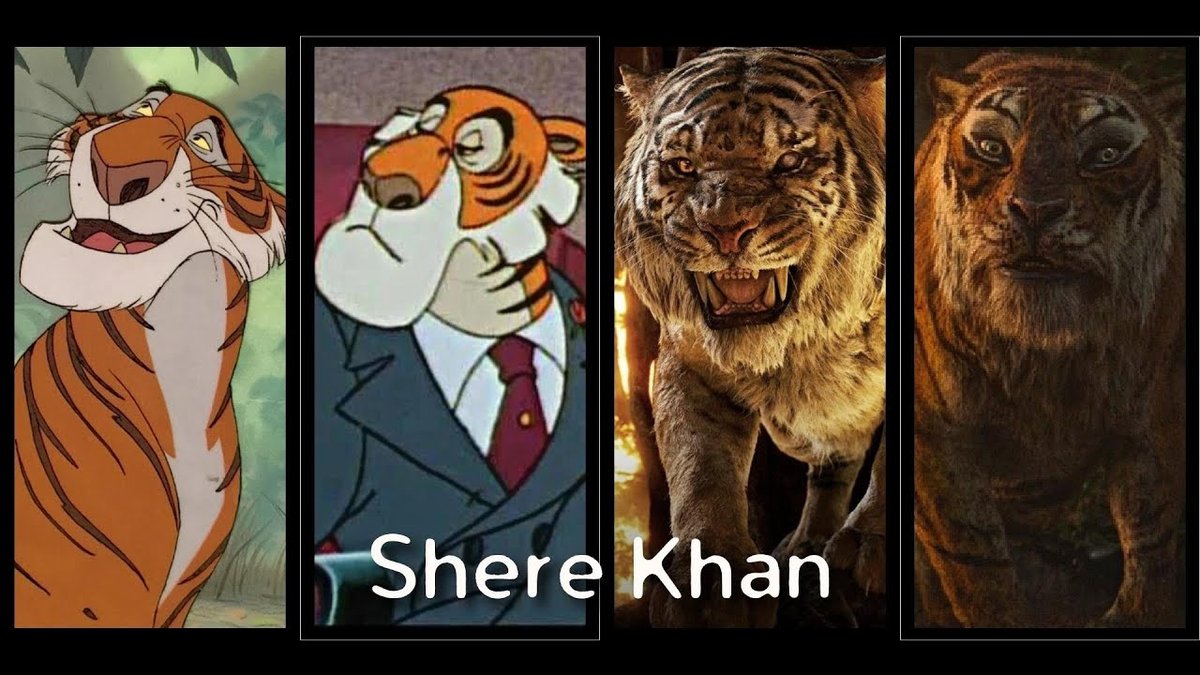
From the moment his menacing purr echoes through the jungle, Shere Khan isn't just a tiger; he's an elegant, articulate, and utterly terrifying force of nature. His very presence demands attention, and for generations, he's embodied the pinnacle of sophisticated villainy in Disney's The Jungle Book. Dive with us into the rich tapestry of Shere Khan: Trivia, Facts, and Behind-the-Scenes Details, uncovering what makes this striped antagonist one of animation's most compelling figures.
This isn't just about surface-level details. We're peeling back the layers on this iconic character, exploring his origins, the masterful animation and voice work that brought him to life, and the enduring legacy that cements his place in popular culture. Prepare to see the jungle through the tiger's eyes – or at least, understand the fear and respect he commands.
At a Glance: Shere Khan's Roaring Legacy
- Who is he? The primary antagonist in Disney's 1967 animated film, The Jungle Book, a sophisticated Bengal tiger.
- What's his deal? He despises humans, particularly the "man-cub" Mowgli, and seeks to kill him.
- Key Traits: Cunning, arrogant, cruel, highly intelligent, charismatic, and fearless (except for fire).
- Iconic Voice: Masterfully voiced by the legendary George Sanders in the original film.
- Distinguishing Feature: One of the few Disney villains without a dedicated musical number in the original movie.
- Why he endures: A believable, physically imposing threat with a complex personality, making him genuinely frightening.
The Tiger King Unveiled: Who is Shere Khan?
Imagine a creature that moves with the grace of royalty, speaks with the cultured tones of an aristocrat, and yet harbors a primal, unyielding malevolence. That’s Shere Khan. He isn't some bumbling villain; he's a calculating predator whose intelligence is matched only by his cruelty. In the vibrant, often joyous world of The Jungle Book, Shere Khan serves as the stark, ever-present shadow—a constant reminder of the jungle's dangerous, unforgiving side.
His motivation is simple yet powerful: an intense, almost philosophical hatred for humans. He sees Mowgli, the orphaned "man-cub," not just as prey, but as a symbolic threat to the natural order and the sanctity of his jungle domain. This deep-seated prejudice fuels his relentless pursuit, setting him apart from many other antagonists whose motives might be greed or power. For Shere Khan, it's about principle, twisted as it may be.
The Disney Difference: From Kipling's Page to Animated Icon
While Rudyard Kipling’s original Jungle Book stories certainly featured a tiger named Shere Khan, Disney's 1967 adaptation took significant liberties, transforming him into the character we know today. Kipling’s Shere Khan was dangerous and despised, but often portrayed as somewhat cowardly and lame. Disney, however, elevated him. They stripped away the physical weakness, giving him unparalleled strength and a refined, almost suave demeanor that made his underlying savagery all the more chilling.
This transformation was a deliberate choice by the animators and storytellers, aiming to create a villain who was both a credible physical threat and a psychological one. They wanted a character who could command respect and instill fear with a mere whisper, rather than just a roar. If you're looking for an in-depth exploration of the tiger's many facets and appearances, you can find a lot more in All About Shere Khan.
Beyond the Stripes: Shere Khan's Defining Traits
What truly makes Shere Khan tick? It’s a combination of traits that craft a villain both fascinating and terrifying. He’s not merely evil; he’s magnificently evil.
A Predator of Prestige: His Sophisticated Villainy
Shere Khan doesn't need to shout to make his point. He communicates through sophisticated speech, sardonic wit, and a chilling composure. He approaches the task of hunting Mowgli with a casual elegance, as if it's merely a regrettable chore he must attend to. This calm, almost bored arrogance is far more unsettling than overt rage. He delights in psychological torment, using fear and intimidation to control others, rather than brute force alone.
Think of his interactions with the other animals: he rarely needs to bare his claws to assert his dominance. His reputation, combined with his sharp intellect, often does the trick. He plays mind games, manipulates conversations, and subtly threatens, proving himself a master of calculated intimidation.
The Fear Factor: How He Wields Fear and Prejudice
Shere Khan's most potent weapon isn't his claws or teeth, but the fear he instills. The entire jungle lives under his shadow. When he arrives, conversation stops, laughter ceases, and animals scatter. This pervasive fear is something he consciously cultivates and enjoys.
His prejudice against humans is central to his character. He believes humans are inherently destructive, incapable of fitting into the jungle's rhythm, and must be eradicated. This isn't just a personal vendetta; it's a deeply ingrained belief system, making him a villain driven by a skewed sense of order and purity. This underlying philosophy makes him more than just a hungry predator; he's an ideologue, which adds another layer of menace to his character, pushing him beyond what you might see in other iconic Jungle Book characters.
Cunning and Cruelty: His Strategic Approach
Unlike other animals who might hunt out of hunger, Shere Khan hunts Mowgli out of a cold, calculating desire to eliminate a perceived threat. He doesn't rush; he plans. He patiently waits for his opportunity, using the fear he inspires to clear his path and isolate his prey. His cruelty isn't a burst of temper; it's a steady, chilling disposition. He enjoys the power he holds over others, savoring their fear and discomfort. This makes him exceptionally dangerous, as he's always several steps ahead, constantly assessing and strategizing.
Bringing the Beast to Life: Behind-the-Scenes Magic
Creating a character as complex and iconic as Shere Khan required a confluence of artistic brilliance—from voice casting to animation.
The Voice of Authority: George Sanders' Iconic Performance
Perhaps the most crucial ingredient in Shere Khan's enduring appeal is the voice of George Sanders. The British actor, known for his suave, urbane, and often villainous roles, was a perfect fit. Sanders brought a sophisticated, almost bored cynicism to the tiger, delivering lines with a smooth, purring cadence that was both seductive and utterly terrifying. His performance made Shere Khan sound less like a wild animal and more like a human antagonist with impeccable manners and deadly intentions.
It's a masterclass in voice acting, proving that sometimes, the most chilling villain doesn't need to scream; a calm, confident voice can be far more impactful. Sanders' voice, distinct and refined, instantly conveyed the tiger's arrogance and intellect, making him a true standout among legendary voice actors.
An Animator's Masterpiece: Milt Kahl's Design and Movement
Shere Khan was animated by Milt Kahl, one of Disney's "Nine Old Men," a legendary group of core animators. Kahl was known for his ability to bring sophisticated, often elegant characters to life, from villains like Madame Medusa to heroes like Prince Phillip. For Shere Khan, Kahl focused on grace and power.
He drew inspiration from real tigers but exaggerated their movements, giving Shere Khan a fluid, almost balletic quality that belied his immense strength. Every movement, every twitch of his tail, every slow blink of his eyes, was carefully crafted to convey his personality—the coiled menace beneath the polished exterior. Kahl's animation made Shere Khan not just a character, but a presence, a testament to the power of classic animation techniques.
The Unsung Song: His Lack of a Musical Number
Interestingly, unlike many other prominent Disney villains who often get their own bombastic musical numbers, Shere Khan does not sing in The Jungle Book. This decision was largely deliberate. Giving him a song might have softened his image, perhaps making him too theatrical or camp, which would have undermined his serious, predatory nature.
While there was a deleted song, "The Mighty Hunters," originally intended for Shere Khan and his jackal sidekick Tabaqui (who was also cut from the final film), its removal helped maintain Shere Khan's status as a pure, unadulterated threat. His quiet, understated menace proved far more effective than any villainous anthem could have been.
Shere Khan's Journey: Key Moments and Motives
Shere Khan's appearances throughout The Jungle Book are pivotal, each moment building on his terrifying reputation and driving the plot forward.
The Man-Cub Menace: His Relentless Pursuit of Mowgli
From his chilling introduction where he emerges from the shadows to interrogate Kaa about Mowgli's whereabouts, Shere Khan's singular focus is clear: eliminate the "man-cub." His fear and hatred are the primary catalysts for Mowgli's journey out of the jungle, setting the entire narrative in motion. His obsession isn't just about food; it’s about a deep-seated belief that humans do not belong and disrupt the balance of the jungle.
He doesn't just want to kill Mowgli; he wants to assert his dominance and enforce his worldview. This makes him a force that even the wise Bagheera and the carefree Baloo struggle to contend with, because they know his cunning far surpasses a simple hunt.
Clash of Ideologies: His Interactions with Bagheera and Baloo
Shere Khan's encounters with Bagheera are charged with intellectual sparring. Bagheera attempts to reason, to protect Mowgli through diplomacy and logic, but Shere Khan dismisses these arguments with sneering contempt. He sees Bagheera's protectiveness as sentimental weakness.
With Baloo, the dynamic shifts. Baloo's laid-back, carefree nature frustrates Shere Khan, who sees it as an insult to his authority. The ultimate battle between Shere Khan, Baloo, and Bagheera is not just a physical struggle but a clash of philosophies—the predator's iron rule against the protectors' love and freedom. This makes Shere Khan a fascinating subject for a deeper dive into Disney villains.
The Fiery Finale: His Ultimate Defeat and Humiliation
Shere Khan's downfall is both poetic and symbolic. His great fear, fire, is ultimately his undoing. Mowgli, the small human he so despises, uses a burning branch to fend him off. The sight of the proud tiger screaming and fleeing with his tail on fire is a moment of pure catharsis, but it's also a deeply humiliating defeat for a creature who prided himself on his fearlessness and dominance. This moment underscores Shere Khan's vulnerability, revealing that even the most terrifying villains have their Achilles' heel.
Unpacking the Icon: Trivia and Lesser-Known Facts
Beyond the plot, Shere Khan is packed with interesting details that add to his mystique.
What's in a Name? The Meaning of "Shere Khan"
The name "Shere Khan" itself carries significant meaning. "Shere" (or "Shir") is derived from Persian, meaning "lion" or "tiger." "Khan" is a title of Central Asian origin, meaning "ruler," "commander," or "sovereign." So, his name literally translates to "Tiger Lord" or "King Tiger," perfectly encapsulating his regal yet dangerous persona. This naming convention adds another layer of gravitas to his character, cementing his self-proclaimed status as the rightful ruler of the jungle.
A Villain Among Villains: His Standing in the Disney Pantheon
Shere Khan consistently ranks high on lists of Disney's greatest villains. His blend of sophistication, intelligence, and primal savagery makes him stand out. He's not a magical sorcerer, nor is he overtly comical; he's a grounded, realistic threat. This realism, combined with Sanders' iconic voice and Kahl's masterful animation, ensures his place as one of the most memorable and genuinely frightening antagonists in Disney history.
Realism in the Jungle: Why He Feels Like a Genuine Threat
Many Disney villains are fantastical, relying on magic or elaborate schemes. Shere Khan, however, feels terrifyingly real. He's a powerful apex predator, cunning and ruthless, operating within the natural laws of the jungle. His motives, though twisted, are understandable from a certain perspective (survival, territorialism, species prejudice). This grounding in reality makes his threat palpable, forcing the audience to truly fear for Mowgli's safety. He represents the stark, brutal side of nature itself, untamed and uncompromising.
The Sequel Saga: His Return in The Jungle Book 2
For those who thought Shere Khan's fiery defeat was the end, he made a triumphant (and still revenge-driven) return in the 2003 sequel, The Jungle Book 2. Voiced by Tony Jay, who inherited the role with a similar refined menace, Shere Khan was still nursing his grudge against Mowgli. His pursuit continued, showing that a humiliating defeat couldn't extinguish his deep-seated hatred. While the sequel itself often receives mixed reviews, Shere Khan's consistent characterization as a relentless, vengeful force remained a highlight.
Shere Khan Across Adaptations: A Roaring Evolution
Shere Khan's allure extends beyond Disney's animated classic. He's been reimagined in numerous adaptations, each bringing a new dimension to his character.
- Disney's Live-Action (2016): Voiced by Idris Elba, this iteration of Shere Khan is even more physically imposing and terrifying. Elba's deep, gravelly voice lends an incredible weight to the tiger's dialogue, emphasizing his raw power and menace. This film restores some of Kipling's original characterization, portraying him as a tiger with old wounds (from a human hunt), fueling his hatred for Mowgli.
- Mowgli: Legend of the Jungle (2018): Benedict Cumberbatch took on the role in this darker, more faithful adaptation of Kipling's tales. Cumberbatch’s portrayal leaned into the manipulative and cunning aspects of the character, with a voice that was both smooth and subtly menacing, emphasizing his intelligence and strategic cruelty.
Each actor and director brings their own interpretation, but the core essence of Shere Khan—a magnificent, cunning, and terrifying predator with a profound hatred for humanity—remains consistent, a testament to the power of Rudyard Kipling's original stories and Disney's foundational work.
Common Questions About Shere Khan, Answered
Let's clear up some lingering questions about this formidable feline.
Why does Shere Khan hate humans?
Shere Khan's hatred for humans stems from a combination of fear, prejudice, and a perceived disruption of the jungle's natural order. He believes humans are destructive, bring fire (his greatest fear) into the jungle, and upset the balance of nature. He specifically claims that humans bring "guns and fire" and are a universal threat to all creatures. His pursuit of Mowgli is an attempt to enforce this worldview and eliminate what he sees as an unnatural blight on his domain.
Is Shere Khan truly evil?
In the traditional sense of a Disney villain, yes, Shere Khan is unequivocally evil. He is cruel, manipulative, takes pleasure in the suffering of others, and seeks to kill an innocent child for reasons based on prejudice rather than necessity. While he might see himself as an enforcer of jungle law, his methods and motivations are purely malicious. He embodies a type of evil rooted in arrogance and an unchecked desire for dominance.
What is Shere Khan's weakness?
Shere Khan's most significant weakness is his intense fear of fire. This phobia is exploited by Mowgli in their final confrontation, leading to the tiger's humiliating defeat. While incredibly powerful and cunning, his irrational terror of flames renders him vulnerable and can override his usual composure and strategic thinking. It's a classic example of how even the most formidable antagonists have a chink in their armor.
The Enduring Roar: Why Shere Khan Still Captivates Us
Shere Khan isn't just a tiger; he's a symbol. He represents the primal fear of the unknown, the dark side of nature, and the insidious nature of prejudice. His sophistication makes him more than just a brute; he's a character capable of articulate threats and chilling psychological warfare. The masterful animation, coupled with George Sanders' iconic voice, created a villain who transcends generations, remaining genuinely terrifying and endlessly fascinating.
As you reflect on Shere Khan's legacy, consider how his character taps into universal fears and fascinations. He's a reminder that true menace often comes not from monstrous appearance, but from a cunning mind and a relentless will. His story encourages us to look beyond the stripes, understanding the layers of arrogance, fear, and prejudice that define one of Disney's most magnificent and memorable villains. His roar may have been silenced, but his impact on cinematic history continues to echo.