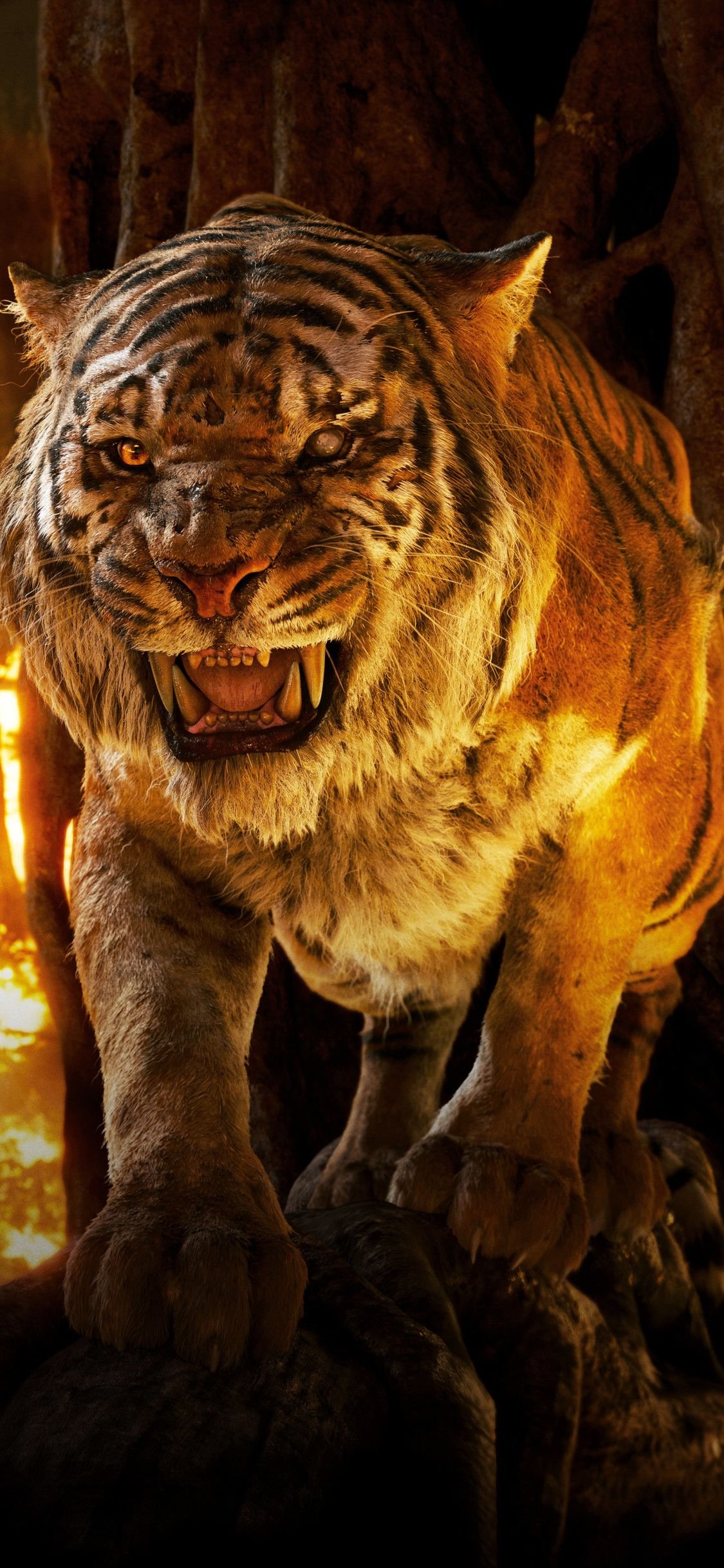
When you hear "Shere Khan," what comes to mind? Is it the silky menace of a classic animated villain, or the guttural snarl of a photo-realistic beast? For many, it's a specific voice – one that embodies the sophisticated danger, cunning intelligence, and chilling predatory instinct of Rudyard Kipling's most infamous creation. The enduring legacy of Shere Khan, the formidable tiger from The Jungle Book, owes as much to the actors who've lent him their voices as it does to his written characterization.
This isn't just about reading lines; it's about crafting a persona, a presence that can simultaneously charm and terrify. Exploring Voice Actors and Portrayals: Iconic Shere Khan Performances reveals a fascinating journey through different eras, interpretations, and the sheer power of vocal artistry. From the golden age of animation to cutting-edge CGI, a diverse array of talent has stepped into the paws of this magnificent, terrifying tiger, each leaving an indelible mark.
At a Glance: Key Takeaways on Shere Khan's Voices
- A Vocal Legacy: Shere Khan has been voiced by a remarkable 86 actors across 19 appearances, showcasing 19 distinct versions of the character.
- The Reign of Tony Jay: Veteran voice actor Tony Jay holds the record for most portrayals, lending his distinctive baritone to Shere Khan in 5 different titles.
- Modern Masters: Recent blockbuster adaptations have seen Hollywood heavyweights like Idris Elba and Benedict Cumberbatch redefine the tiger's roar for new generations.
- Global Phenomenon: The character's international appeal means countless talented actors worldwide have contributed to Shere Khan's iconic soundscape.
- More Than Just a Voice: Each portrayal adds a unique layer to Shere Khan, influencing how audiences perceive his menace, intelligence, and underlying vulnerabilities.
The Enduring Roar: Why Shere Khan's Voice Matters So Much
Shere Khan isn't merely a brute. He's an intelligent, manipulative predator, driven by a deep-seated hatred for Mowgli and an almost philosophical disdain for humanity. His strength is undeniable, but his true power lies in his cunning and his ability to command respect—or fear—through his presence and, crucially, his voice. A less convincing voice would reduce him to a generic villain; a truly iconic one elevates him to legend.
Consider the character's core attributes: royalty, arrogance, calculated cruelty, and a surprisingly fragile ego. These aren't expressed solely through animation or live-action CGI; they're channeled through vocal performances that convey everything from a dismissive purr to a thunderous roar. The right voice can make Shere Khan not just scary, but captivating.
The Unseen Maestros: A Symphony of Shere Khan Voices
Over the decades, creators across film, television, and video games have sought the perfect vocal match for the scarred tiger. According to BTVA, a staggering 86 actors have stepped into this role across 19 unique appearances, spanning 18 different titles. This incredible number underscores the character's versatility and the creative freedom each new adaptation brings. While the visual interpretation might change, the essence of Shere Khan — his menace, his gravitas — is consistently delivered through the power of voice.
This rich tapestry of performances includes everything from brief video game cameos to career-defining animated features, each actor adding a brushstroke to the overall portrait of this legendary villain. It's a testament to the enduring appeal of The Jungle Book that so many have taken up the challenge of voicing its most formidable antagonist. For a deeper dive into the character's complete history, you might be interested in All About Shere Khan.
Tony Jay: The Definitive Roar and the Voice of Disney's Tiger
When many fans think of Shere Khan's voice, one name immediately springs to mind: Tony Jay. His smooth, resonating British baritone became synonymous with the character for an entire generation, especially within the expansive Disney universe. Jay didn't just voice Shere Khan; he embodied him, bringing a sophisticated menace that was both charming and deeply unsettling.
Tony Jay holds the distinction of having voiced Shere Khan in more titles than any other actor – a total of five separate appearances. His portrayal masterfully balanced aristocratic poise with barely concealed savagery, making his Shere Khan an intellectual predator rather than a simple beast.
His iconic performances include:
- The Jungle Book 2 (2003 Movie): Jay reprised his role, bringing back the familiar, chilling presence to continue his vendetta against Mowgli. His voice, mature and menacing, underscored the tiger's relentless pursuit.
- Disney's House of Mouse (2001 TV Show): In this crossover series, Jay's Shere Khan maintained his classic persona, often appearing as a dryly witty, albeit still dangerous, antagonist amongst Disney's other villains.
- The Jungle Book: Rhythm 'n' Groove (2000 Video Game): Even in a musical game setting, Jay's voice provided that essential touch of Shere Khan's distinctive character, solidifying his vocal identity across mediums.
- Jungle Cubs (1996 TV Show) (Adult Shere Khan): This prequel series offered a glimpse into Shere Khan's younger days. While Jason Marsden voiced the cub, Jay returned for the "Adult Shere Khan" segments, reminding audiences of the formidable tiger he would become.
- TaleSpin (1990 TV Show): Jay’s first major outing as Shere Khan in the Disney animated universe saw him as a wealthy, ruthless businessman (also a tiger) in the city of Cape Suzette. Here, his voice infused the character with a corporate cunning that was equally, if not more, dangerous than his jungle counterpart.
Jay’s performances set a high bar, influencing subsequent portrayals and cementing his place as perhaps the most enduring voice of Shere Khan for Disney fans. His ability to convey gravitas, sarcasm, and a chilling threat all within the same breath made his Shere Khan truly unforgettable.
Modern Interpretations: New Roars for a New Era
With each new adaptation of The Jungle Book, filmmakers face the challenge of reinterpreting classic characters for contemporary audiences. For Shere Khan, this often means finding a voice that honors the original's menace while bringing a fresh perspective. The 2010s saw two major live-action/CGI features tackle this very task, enlisting A-list talent to breathe new life into the tiger.
Idris Elba: The Primal Force of "The Jungle Book" (2016)
When Disney unveiled Jon Favreau's The Jungle Book in 2016, the choice for Shere Khan was Idris Elba. Known for his commanding presence and resonant voice, Elba brought a raw, primal intensity to the character that was both terrifying and utterly captivating.
Elba's Shere Khan was less the smooth, urbane villain of Disney's animated classic and more a force of nature—a scarred, vengeful predator whose every growl and snarl sent shivers down the spine. His voice carried the weight of experience, a deep-seated hatred, and an undeniable power that permeated every scene. From the moment he first spoke, Elba’s Shere Khan established himself as the undisputed king of the jungle, ruling by fear. International audiences also heard powerful interpretations from actors like Tsuyoshi Koyama and Yusuke Iseya (Japan), and Nana Patekar (India), who brought their own cultural nuances to Elba's formidable performance.
Benedict Cumberbatch: The Darker Edge of "Mowgli: Legend of the Jungle" (2018)
Andy Serkis's darker, more grounded take on the story, Mowgli: Legend of the Jungle (2018), featured Benedict Cumberbatch as Shere Khan. Cumberbatch, celebrated for his versatile vocal range and ability to convey complex intelligence, offered a nuanced yet equally terrifying portrayal.
Cumberbatch’s Shere Khan was colder, more calculating, and imbued with a palpable sense of ancient evil. His voice often dropped to a menacing whisper, making his threats feel deeply personal and insidious. It wasn't about brute force alone; it was about psychological torment and a cunning intellect. This Shere Khan reveled in fear and psychological manipulation, creating a truly unsettling presence that resonated with the film’s more mature themes. Alongside Cumberbatch, actors like Tsuguo Mogami (Japan) and Lutz Riedel (Germany) delivered compelling international performances.
Beyond the Blockbusters: A Global Menagerie of Voices
While Tony Jay, Idris Elba, and Benedict Cumberbatch are often the most recognized voices, Shere Khan’s legacy extends far beyond these marquee performances. The character has appeared in countless adaptations across different media, each bringing a new actor's interpretation to the forefront.
Animated Series and Direct-to-Video Features
Television has offered consistent opportunities for new voice actors to tackle Shere Khan. In Jungle Cubs (1996 TV Show), for example, Jason Marsden voiced the cub version, a character who, while still arrogant, hadn't yet fully embraced the adult tiger's full villainy. Later, of course, Tony Jay would voice the adult version, creating a perfect bridge between the young cub and the feared predator.
Another notable animation performance comes from Sherman Howard in The Jungle Book: Mowgli's Story (1998 Movie), who brought a different flavor of menace to the direct-to-video film. In the more recent The Jungle Book (2012 TV Show), Marc Thompson and David Holt each contributed their vocal talents, keeping the character alive for a new generation of animated viewers.
Early Cinematic Roars: Before Disney's Classic
Before Disney's 1967 animated classic, the character of Shere Khan had already seen numerous screen adaptations. Roddy McDowall lent his voice to Shere Khan in Mowgli's Brothers (1976 TV Show), an earlier, more faithful adaptation of Kipling's text. This pre-Disney era of portrayals often carried a more direct, less anthropomorphic menace, focusing on the tiger as a force of nature.
The Original Animated Classic: George Sanders' Elegant Terror (1967)
The performance that defined Shere Khan for generations of Disney fans came from George Sanders in The Jungle Book (1967) (1967 Movie). Sanders, known for his suave, villainous roles, imbued Shere Khan with an aristocratic elegance that made his cruelty all the more chilling. His voice was smooth as silk, yet carried an undeniable undertone of danger, making him charmingly sinister. This Shere Khan was a master of manipulation, his threats delivered with an almost bored sophistication.
Interestingly, Sanders' original performance also had backup vocalizations from Thurl Ravenscroft and Bill Lee for certain roars and specific lines, a testament to the collaborative effort in crafting such an iconic character. Internationally, actors like Seizo Kato (Japan), Siegfried Schürenberg (Germany), and Carlo D'Angelo (Italy) provided their own distinct takes, ensuring Sanders' elegance translated across cultures.
Video Games and Interactive Experiences
From full-fledged story-driven games to casual apps, Shere Khan’s voice has appeared in various interactive forms. Tim Simmons voiced the tiger in The Jungle Book (App) (2015 Video Game), providing a modern digital interpretation. Other games, like Creative Reader: The Jungle Book (1995 Video Game), featured Jim Cummings, a legendary voice actor known for his versatile roles, further cementing Shere Khan's presence across different entertainment platforms.
The Global Roar: International Voices of Shere Khan
The global reach of The Jungle Book means that Shere Khan has been voiced in countless languages. Each dub brings a new layer of cultural interpretation to the character, often aligning with local theatrical traditions while staying true to the character's essence. For instance, Seizo Kato has been a recurring voice for Shere Khan in Japanese dubs, spanning from the 1967 Disney film to The Jungle Book 2. Meanwhile, actors like Victor Trujillo (Spanish for The Jungle Book 2016) and Armando Tiraboschi (Italian for Mowgli: Legend of the Jungle) are just a few examples among the dozens of talented artists who've given Shere Khan his distinctive voice for audiences worldwide. This vast array of international voices truly highlights the character's universal impact.
The Art of the Roar: What Makes a Great Shere Khan?
Voicing Shere Khan isn't simply about sounding intimidating. It's a complex acting challenge that requires a unique blend of vocal qualities and dramatic understanding.
Here's what distinguishes a truly iconic Shere Khan performance:
- Sophisticated Menace: The best Shere Khans don't just roar; they purr their threats, making them feel more personal and insidious. There's an intelligence behind the cruelty, a calculated nature to his villainy.
- Gravitas and Authority: Shere Khan believes he is royalty, the true king of the jungle. His voice must reflect this inherent arrogance and command, making others instantly aware of his power.
- Contained Rage: While he can unleash a terrifying roar, the most impactful moments often come when his anger is simmering just beneath the surface, communicated through a tense growl or a clipped, dangerous tone.
- Vulnerability (Subtle): Paradoxically, a truly great Shere Khan performance might hint at his underlying fear of man and fire, which drives much of his hatred for Mowgli. This subtle vulnerability makes him a more complex, believable antagonist.
- Distinctive Tone: Whether it's George Sanders' smooth English accent, Tony Jay's deep resonant baritone, or Idris Elba's gravelly growl, each iconic voice has a unique timbre that sets it apart and makes it instantly recognizable.
- Articulation and Clarity: Despite the animalistic nature, a clear delivery of dialogue is crucial for Shere Khan's manipulative monologues and cutting remarks. He often speaks in complete, eloquent sentences, reflecting his self-perceived superiority.
Challenges and Triumphs: Reinterpreting an Icon
Taking on Shere Khan's voice is no small feat. The challenge lies in honoring the character's established legacy while bringing something new and compelling to the role. Actors must navigate:
- Audience Expectations: Fans often have a strong connection to previous versions, especially George Sanders' or Tony Jay's portrayals. Meeting these expectations while avoiding mere imitation requires immense skill.
- Balancing Humanity and Bestiality: Shere Khan is a talking animal, but his personality is deeply human in its flaws and ambitions. Voice actors must find the sweet spot between an animalistic growl and nuanced human emotion.
- Consistency Across Mediums: Whether it's a TV series, a film, or a video game, maintaining a consistent character voice while adapting to different narrative demands can be tricky.
Yet, when done right, these performances triumph. They remind us that voice acting is a powerful, transformative art form capable of shaping our perception of even the most iconic characters. The diverse collection of voices for Shere Khan is a testament to the enduring creative potential within Kipling’s tale.
The Legacy of Shere Khan's Voice: A Predator's Unending Echo
Shere Khan’s power lies not just in his striped hide and sharp claws, but in the intelligent, menacing voice that defines him. From the urbane threat of George Sanders to the chilling baritone of Tony Jay, and the raw ferocity of Idris Elba and Benedict Cumberbatch, each actor has contributed to a rich, evolving portrait of one of literature's most compelling villains. These vocal performances don't just bring the tiger to life; they imbue him with personality, intention, and a chilling presence that lingers long after the credits roll.
As adaptations of The Jungle Book continue to emerge, new voice actors will undoubtedly step forward to offer their own unique interpretations of Shere Khan. Each new voice will add another layer to his complex legacy, ensuring that the iconic predator's roar, purr, and chilling whisper continue to echo through the jungles of our imagination for generations to come. The enduring fascination with Shere Khan's voice is a powerful reminder that sometimes, the unseen performance is the one that leaves the deepest mark.